


Skip to content

Medical Web Design Services in San Antonio

More booked appointments, not more visitors.

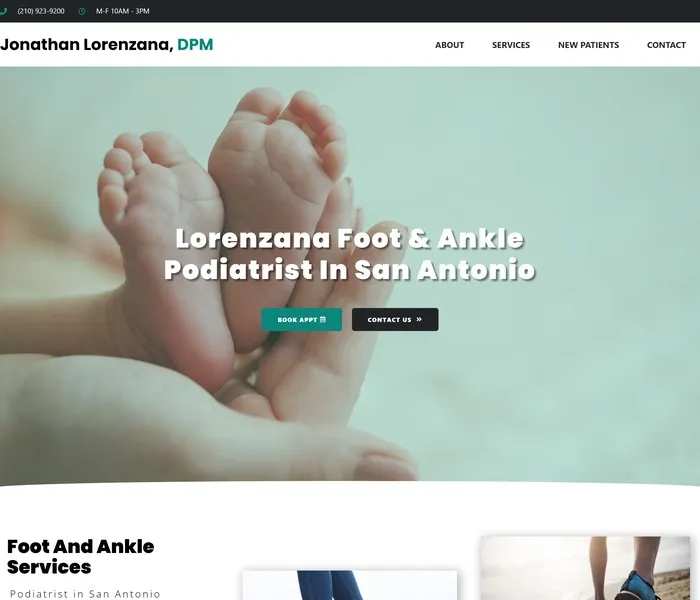
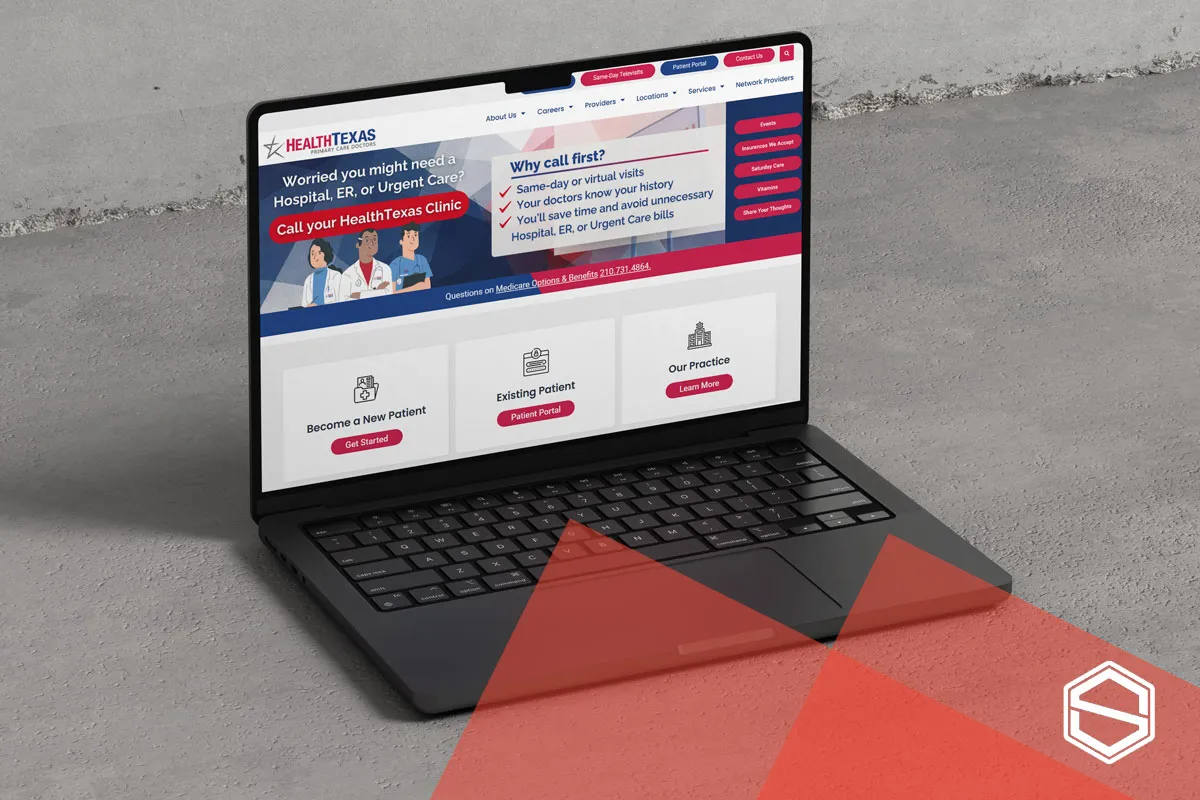
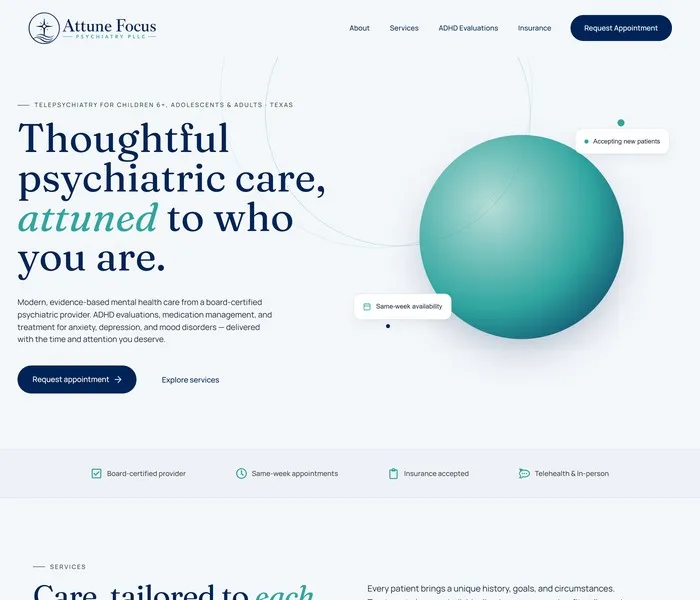
Medical web design in San Antonio means building a site a patient can use on a phone, in a waiting room, at 10 PM, and a site your practice can stand behind on accessibility and patient privacy. We have built for primary care, psychiatry, home health, podiatry and family medicine practices across the city, from single-provider offices to multi-location groups.

A San Antonio medical practice website shown on a laptop screen
5-Star Google Reviews
San Antonio Based

Why generic web design fails medical practices

Most web designers build a medical site the way they build a restaurant site. New photos, cleaner layout, a contact form. Then the practice finds the problems in month three.

The scheduling widget the office already pays for does not embed properly, so the front desk keeps taking appointments by phone. The contact form emails patient messages in plain text to a shared inbox, which is a conversation nobody wants to have with a compliance officer. The provider directory was built as one long page, so a patient looking for a specific doctor scrolls past eleven others. Nothing on the site says which insurance is accepted, which is the most common reason a patient leaves and calls somewhere else.

None of that shows up in a design review. All of it shows up in the appointment book.

A person using a wheelchair typing at a desktop keyboard

Accessibility and patient privacy

Two different things sit in this section, and we treat them differently.

Accessibility is on us. Healthcare sites serve older patients, patients with low vision and patients using screen readers more than most industries do. We build to WCAG standards: real contrast ratios, keyboard navigation that works, labelled form fields, meaningful alt text and heading structure a screen reader can move through. It is tested before launch, not after.

Patient privacy is your practice’s call, not ours. We are not your compliance officer and will not act like one. What we need up front is your list. Which form handler you are permitted to use. Whether an agreement is already in place with that vendor. What may and may not be collected through a web form. Which analytics and advertising tags are allowed on pages patients reach after scheduling. Whether your scheduling vendor is embedded or linked out to.

That list gets collected in discovery, the build follows it, and your practice reviews before launch. If a rule changes later, we make the update. You set the requirements. We build to them.

A receptionist assisting a patient at a medical clinic front desk

Where the build ends and the ongoing work starts

Everything here serves one outcome: the patient who found you actually books. Below is what the build includes, and what sits outside it.

Design and build

Designed for your practice specifically, built mobile first because that is where patients look for a doctor. Fast enough that someone standing in a parking lot on a phone does not give up before the page renders.

Provider and location pages

Every provider gets a real page. Patients search for a person as often as they search for a practice, and a provider page is what lets someone find the doctor they were referred to.

If you have one location, that page plus your address, hours and map is what puts you in local results for your part of the city. If you have several, each one gets its own page and competes in its own neighborhood, instead of all of them fighting over a single address.

Insurance and new patient information

Structured so a patient can answer “do you take my plan” without calling. It is the highest friction question in the funnel and most practice sites bury it three clicks deep or leave it off entirely.

Appointment and intake flow

We work with whatever scheduling system the practice already uses rather than replacing it. If you require a specific form handler, or an agreement in place with the vendor, that requirement gets written down in discovery and built to.

SEO foundation at launch

Sitemap submitted, schema deployed, page level SEO, Google Business Profile linked. In place at launch, not retrofitted six months later.

Site copy

Drafted with your input. Provider pages, location pages, service pages, about and contact. Written for patients, reviewed by your practice before it goes live.

Marketing planning materials, charts and handwritten notes spread across a desk

Offered separately as ongoing services

None of these ride along with the build. Each is its own engagement, priced against what your practice actually needs.

Local SEO

Getting each location found by the patients nearest to it. Profile management, citation work, and the ongoing on-page work that keeps a location page competitive in its own part of the city.

Google Ads

Useful when a practice needs patients before organic has had time to compound, or when a specific service line needs volume fast. Most of the waste in a medical Ads account is the page the click lands on, not the bid.

Ongoing content writing

Condition pages, procedure pages and patient education that answer the questions your patients actually search before they call.

Reputation and reviews management

Review acquisition, response management, monitoring across the profiles patients actually read. Reviews are the strongest local ranking factor in healthcare and the slowest to build. It is a program, not a setting.

Website maintenance

Updates, backups, security and plugin maintenance so the site stays fast and current after launch instead of quietly falling behind.

Accessibility monitoring

Accessibility is not a one time pass. Every time content changes, something can break. Ongoing checks keep the site meeting the standard it launched with.

From search to booked appointment

Here is what actually happens when someone searches “family doctor near me” on a Tuesday night.

They open two or three results. In the first thirty seconds they are looking for four things. Do you treat what I have. Are you actually near me. Do you take my insurance. Can I book without calling during business hours.

Answer all four fast and you get the appointment. Miss one and they go back to the results page.

We build the first thirty seconds first. Location, insurance and a way to book, visible without scrolling. The deeper pages carry the patient who is researching a condition or comparing two practices before deciding. Those visits matter too. They just convert slower.

Some patients now skip the results page altogether. They ask ChatGPT or Google’s AI for a family doctor nearby who takes their insurance, and they act on the answer. The same clear site that wins the first thirty seconds gives those tools more to work with when they describe your practice.

How long this takes

Most practices ask before anything else. The honest version depends on how much of your content already exists.

  • Weeks 1 to 2: Discovery and content collection. This is the phase practices underestimate. We need provider bios, headshots and credentials, your insurance list verified against what the billing office actually accepts, and your privacy requirements in writing. If those exist, we move fast. If they do not, this is where a schedule slips.
  • Weeks 3 to 6: Structure, then design. Provider and location architecture is decided first, because it determines everything downstream. Design and copy follow, written for patients and reviewed by whoever signs off clinically.
  • Weeks 7 to 9: Build, integration and accessibility testing. Your scheduling vendor is connected and tested against real appointment types, not a demo. Accessibility is audited against WCAG on staging, before anything is public.
  • Weeks 10 to 11: Clinical and compliance review, then launch. Your team reads the site the way a patient would. Nothing goes live until whoever owns compliance at your practice has signed off.
  • After launch: a single-location practice earns visibility by owning its conditions and its part of the city, which is a narrower target and often a faster one. A group earns it across more surfaces at once, one provider and one location page at a time.

Recent medical work

View All →
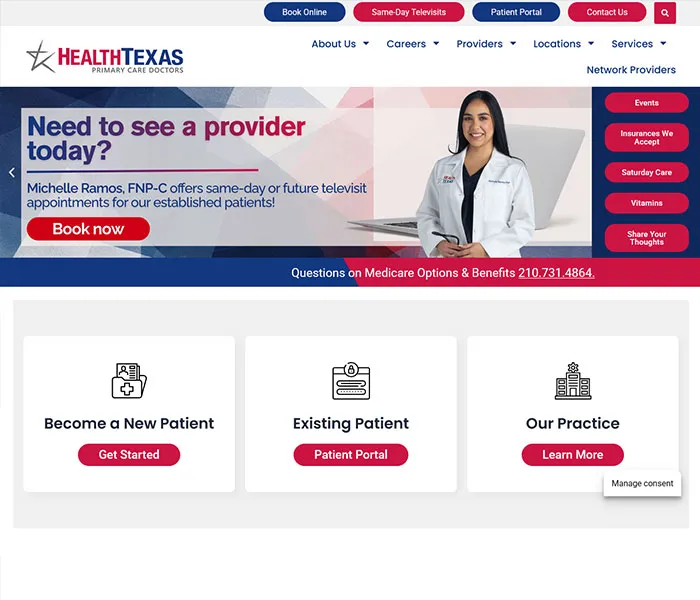
  1. HealthTexas
    Multi-Location Primary Care

    Primary care group with 18 San Antonio locations. Every location and every provider carries its own page, so a patient searching for a clinic near them lands on that clinic rather than a directory.

    View Site → (HealthTexas, opens in a new tab)
    Screenshot of the HealthTexas primary care website homepage

What this costs

Most medical practices in San Antonio hide pricing. I’m not going to.

Medical practice websites start at $4,250. Site copy and the SEO foundation are part of that, not a line item added afterward.

What moves the number is scope: how many providers need their own page, how many locations, whether we are integrating a scheduling vendor or linking out to it, and how unusual your privacy and accessibility requirements turn out to be. Ongoing services are quoted to the practice.

Ask for a quote and you get the real figure for your practice, not a range.

Practice types we work with

We build for:

  • Primary Care
  • Family Medicine
  • Pediatrics
  • Podiatry
  • Physical Therapy
  • Chiropractic
  • Psychiatry
  • Behavioral Health
  • Home Healthcare
  • Clinical Research

If your specialty is not listed, ask. The build process does not change much between specialties. What changes is the patient, and that is a discovery conversation.

Medicine is one of several industries we build for. A law firm web design build is shaped by a prospect deciding who to trust with a case. A restaurant website design is shaped by someone reading a menu on a phone before they decide where to drive. Different decisions, same approach to building for them.

FAQS

Questions medical practices ask

How much does a medical practice website cost?

Medical practice websites start at $4,250 with site copy and the SEO foundation included. Where a project lands depends on how many providers and locations need their own pages, and whether patient scheduling is embedded or linked. Get a quote and we will give you the actual number.

How long until my practice sees results?

Google Ads can drive appointments from week one. Organic takes 3 to 6 months to show real movement and 6 to 12 to compound. A single-location practice usually sees it first on condition searches and in its own part of the city. A group sees it across more surfaces at once.

Can my practice show up when patients ask ChatGPT or Google’s AI?

It can, with no promise of which practice gets named. AI tools build their answers from what they can find and trust about each practice: your website, your Google profile and what patients say in reviews. A clear site is the base; staying in those answers is ongoing work, covered under AI SEO.

Do you handle HIPAA compliance?

We build to the requirements your practice gives us. Your practice or its compliance lead defines what is required, including which form handlers and vendors you are permitted to use and what may be collected through the site. We implement that and your team reviews before launch. We do not act as your compliance officer.

Do you work with single provider practices?

Yes. Single provider practices are some of our best clients. The same approach that works for a multi-location group works at one location, with fewer pages and a smaller build.

What practice types do you serve?

Primary care and family medicine, pediatrics, podiatry, physical therapy, chiropractic, psychiatry and behavioral health, home healthcare, and clinical research. If yours is not on the list, ask. The build process changes less between specialties than people expect.

Do you handle Google Ads for medical practices?

Yes. The page someone lands on after clicking an ad decides whether the click was worth paying for. We build those alongside the site rather than pointing ads at a homepage.

Do you use templates or custom design?

Custom. Every site we build is designed from scratch in Elementor, including the smaller ones. A template cannot solve provider structure, location pages, insurance visibility or accessibility, and those are the parts that fill the appointment book.

What happens after launch?

You own the site, the code and the domain. Ongoing SEO, content and maintenance are offered separately and are not a condition of the build.

Let's talk

If you run a medical practice in San Antonio and the appointments are not coming from your website, tell us about the practice and we will tell you straight what the site needs and what it will cost. San Antonio based since 2015, owner led, with five-star Google reviews from local businesses across the city.